Bailey is an approximately two-year-old retriever mix with a complex developmental and trauma history. She was separated from her mother and littermates at only four to five weeks of age, during critical social and emotional developmental periods. Early separation of this kind is associated with increased fearfulness, anxiety-related behaviors, and impaired social development with both humans and other dogs.
Following this early disruption, Bailey was acquired through an informal adoption from a retail parking lot into a highly unstable household environment involving domestic violence and substance abuse. Much of her time was spent isolated in a kitchen area with minimal social interaction or environmental enrichment. Nutritional inconsistency, lack of structure, and aversive training methods—particularly surrounding house training—further contributed to her emotional instability and distrust of her environment.
After the abrupt removal of the primary male attachment figure by legal authorities, Bailey experienced further instability as unfamiliar individuals frequently moved in and out of the home. Eventually, her owner chose to surrender her to extended family, at which point she came into the care of Benjamin Hartwell.
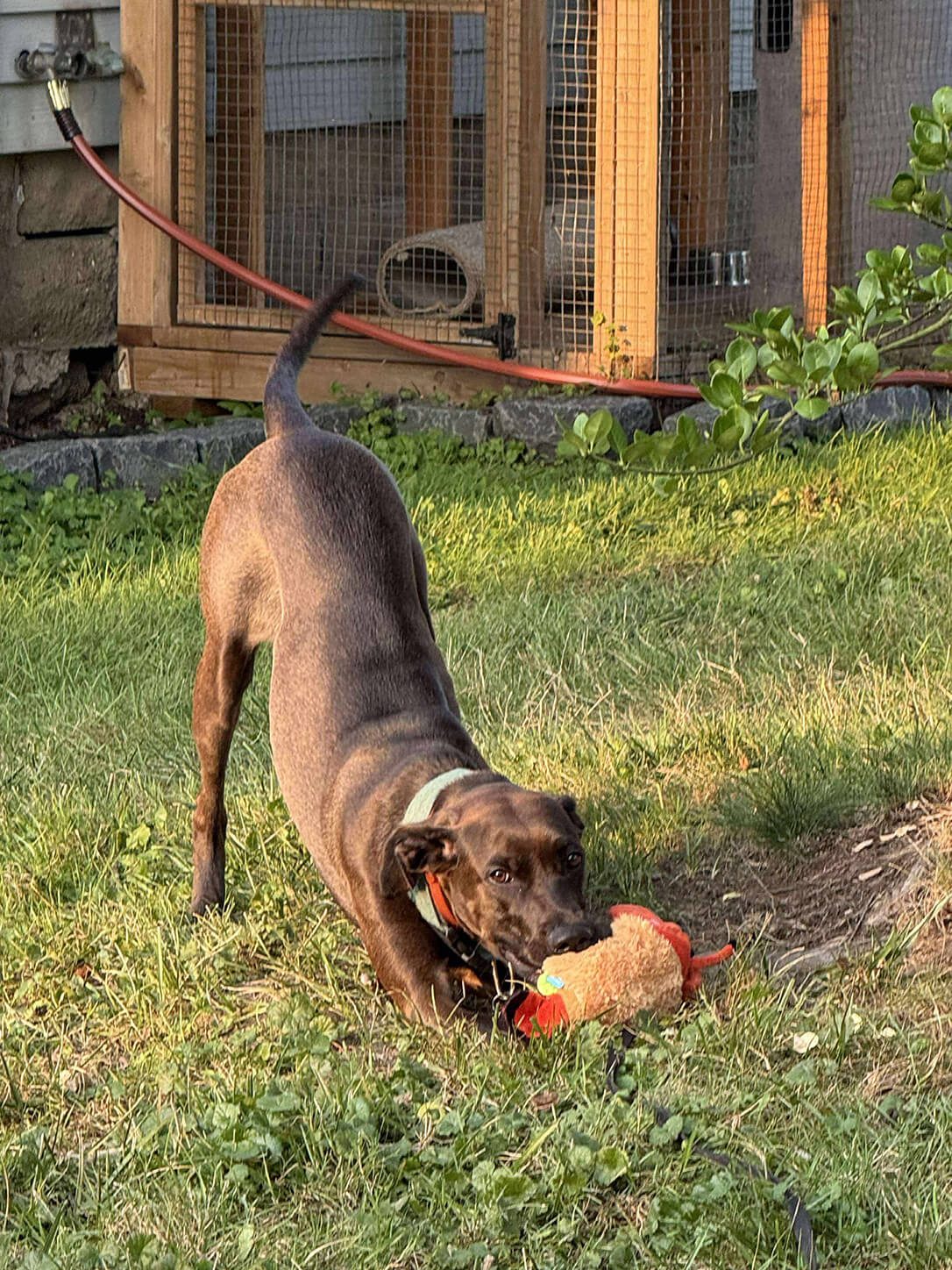
Bailey’s behavioral concerns were immediately apparent. However, intervention began during a period of significant environmental transition, including a household move, extensive home renovations, and integration into a multi-species home with resident dogs and cats, a species she had little to no prior experience living alongside.
It was within this context that our work with Bailey began.
Bailey presented with severe anxiety and panic-related behaviors that significantly impacted both her quality of life and that of her caregivers.
“I’d be lying if I said it was always easy, or even that I always thought it was worth it. There were days it was too much; times I just wanted her to stay away from me. She was pacing for hours, inconsolable, completely unaware of everything around her. She’d wake me up, pacing in circles across my head and body. There were times we’d say things like “It’s not fair to us”, “She takes too much,” “Our lives revolve around her.” And yes, we considered behavioral euthanasia. Of course we did.” – Benjamin
Bailey’s case represented not only a significant behavioral rehabilitation effort but also a long-term family support process centered on sustainability, welfare, and realistic expectations.
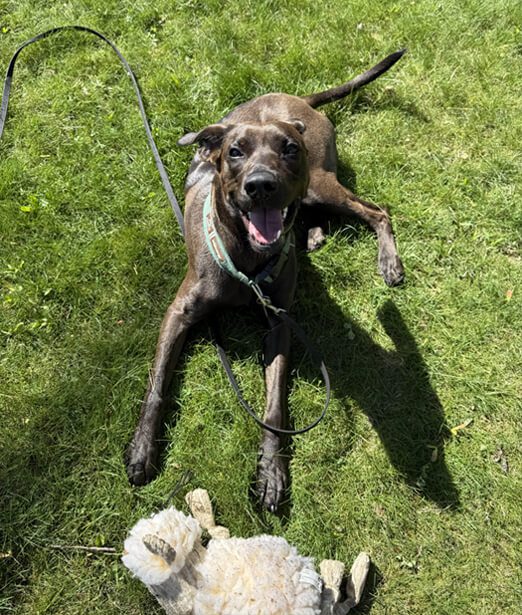
The primary goal for Bailey was, and is, a life worth living for her and her family, with a focus on improved welfare. One where the impact of Bailey’s limitations can be lessened on her family and herself to a point where joy can be found again, and there are more good days than bad. Balancing improvement with acceptance that sometimes we aren’t going to get to the perfect dog we might have dreamed of and understanding that a new image can be built in our minds of what being happy together can look like.
For dogs with significant developmental trauma, progress is rarely linear. Treatment planning required continual reassessment as Bailey’s environment, triggers, coping skills, and resilience evolved over time. Getting there, especially for a dog with trauma as severe as Bailey’s, requires a multi-pronged approach and moving goal posts that adjusted continuously as the environment changed and Bailey progressed, both forward and backward.
Initial efforts focused on reducing Bailey’s exposure to overwhelming stimuli while helping her establish safety and predictability within her new environment.
At the same time, veterinary collaboration was initiated to evaluate medical contributors to behavior, assess for pain, and trial behavioral medication support. Given the severity and chronicity of Bailey’s symptoms, psychopharmacological intervention was considered an essential component of treatment.
Pattern games, predictability exercises, and low-pressure engagement activities were introduced to begin building emotional safety and trust.
As Bailey began demonstrating greater stability, treatment shifted toward building relaxation skills and identifying environments in which she could successfully decompress during triggering events.
A structured relaxation protocol was implemented alongside ongoing observation of Bailey’s behavioral preferences and coping patterns. Several “safe spaces” within the home were trialed and reinforced through positive associations and repeated low-stress experiences.
An important component of Bailey’s progress involved evaluating her individual welfare needs beyond symptom reduction alone. This included consideration of species-typical and breed-specific outlets, as well as Bailey’s own preferences and individual needs and motivational systems.

Increasing access to these highly reinforcing experiences substantially improved Bailey’s overall emotional resilience and engagement with her environment.
Because Bailey demonstrated strong escape tendencies during periods of distress, recall conditioning was integrated into daily life. At the same time, systematic desensitization and counterconditioning protocols were implemented for a wide range of novel environmental triggers.
As Bailey’s coping abilities improved, therapeutic play techniques were incorporated around previously distressing stimuli. Over time, trigger salience decreased, recovery times shortened, and Bailey demonstrated improved ability to re-engage socially and behaviorally following stress exposure.
Escape attempts decreased significantly, and Bailey successfully integrated into daily life with both canine and feline household members.
While setbacks and regression periods still occur, these episodes are now approached through ongoing reassessment, collaborative problem-solving, and adjustment of treatment goals as needed.
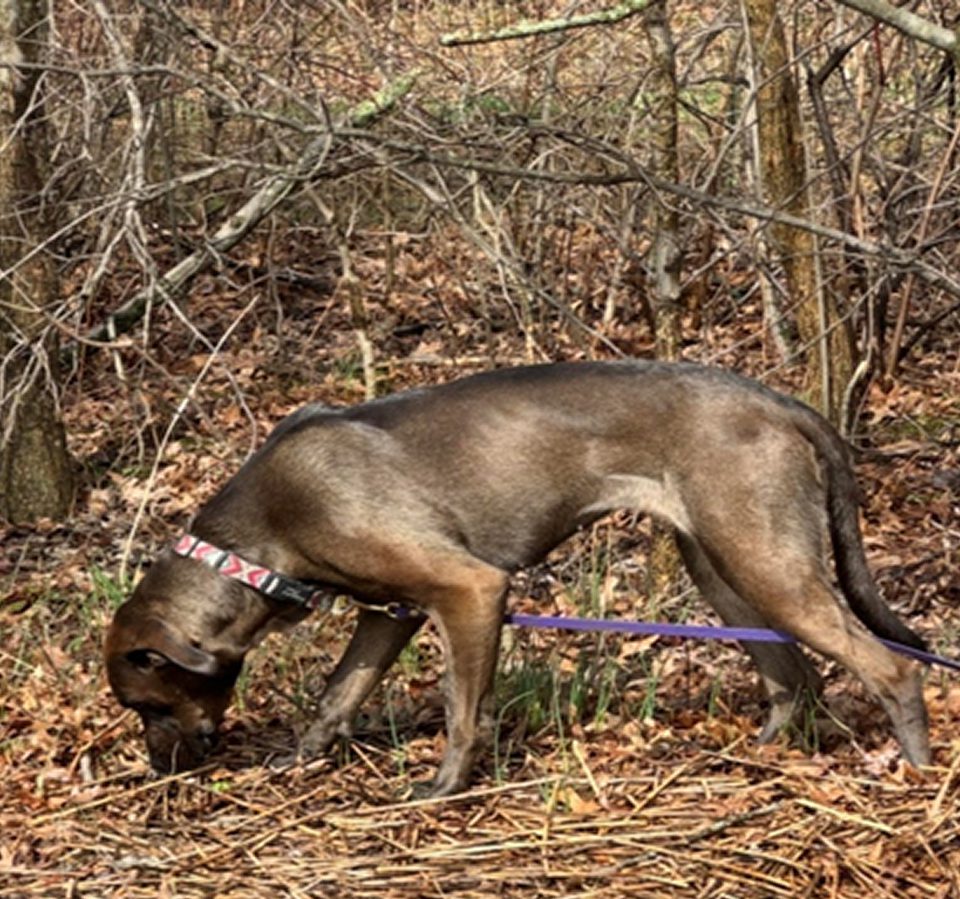
Today, Bailey is thriving in many ways that once felt unattainable. Most days, she is able to engage in normal household life: playing, communicating socially, resting comfortably, and participating meaningfully with her family. Her family reports a significantly improved quality of life and increased confidence in supporting her needs.
Bailey continues to experience periodic relapses and remains a dog with above-average emotional and environmental support needs. However, her family now possesses the skills, structure, and understanding necessary to navigate those challenges with greater stability and compassion.
Cases like Bailey’s remind us that behavioral rehabilitation is not always about creating a “perfect” dog. Often, it is about building safety, resilience, communication, and sustainable coexistence—while honoring both the dog’s limitations and their capacity for growth.
At Insight and Instinct Pet Behavior Services, we believe success is measured not only by reduced symptoms but also by restored connection, improved welfare, and the ability for both dogs and their humans to experience joy together again. Bailey has taught us much about supporting you and the emotionally and behaviorally challenged dogs in your lives.